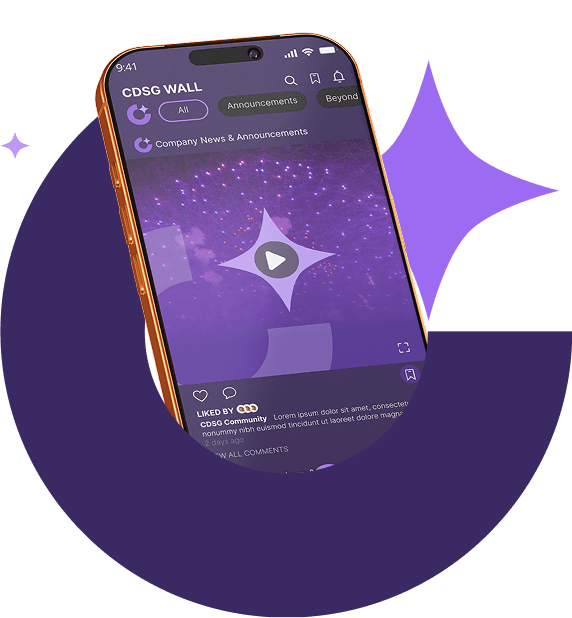
User Experience Layer
A mobile application and digital interfaces that reflect the client's name and visual identity, delivering a unified experience for content, services, requests, notifications, and reports. The interface supports customizable menus, pages, and modules based on user types and permissions.
Management and Control Layer
An administrative portal that enables authorized teams to publish content, manage users and roles, configure modules, send notifications, review requests, and control access to reports.
Additional Modules Layer
Adds capabilities such as single sign-on, learning, cybersecurity, surveys and ticketing, travel, intelligent assistants, content management, system integrations, and Power BI dashboards. Each module is activated according to a separate scope, with defined data, integration, and capacity requirements.
Integration Layer
An integration interface that connects the platform with Microsoft Entra, Active Directory, Microsoft 365, Oracle, SAP, Asana, Power BI, IBM, Salesforce, AWS, and other systems, subject to API availability and client policies. It supports synchronization, data exchange, and unified workflows without replacing existing systems.
Data and Analytics Layer
Collects operational, content, engagement, and request data in structured repositories, with access permissions, export capabilities, reports, and dashboards. Client data can be separated, with retention and access policies defined according to the agreed model.
Identity and Security Layer
Provides identity management, authentication, roles, and permissions, with support for single sign-on when selected, activity logging, user session protection, and controls for integrations and data access. Encryption, testing, and monitoring requirements are defined according to service sensitivity.
Hosting and Operations Layer
A hosting environment covering services, databases, storage, content, networking, monitoring, backups, and support. Capacity is designed according to the number of users, media volume, storage requirements, bandwidth, servers, and content delivery network needs.
Artificial Intelligence Layer
When the intelligent assistant is enabled, approved knowledge sources are connected to search and retrieval mechanisms with access controls, enabling question answering, enterprise search, content drafting, process guidance, and automation, supported by usage controls, review, and monitoring.